Step
Requirement & Reference Study
Fit, function, materials and constraints defined before any geometry is drawn.
Design for Manufacturing review for injection molded plastics, CNC machined parts and sheet metal assemblies, built into the CAD process from the first model instead of added as an afterthought.
The service page explains the risk it solves, the deliverables included and the workflow used to reach a production-ready result.
Every stage produces a clear decision, review point or manufacturing deliverable.
Fit, function, materials and constraints defined before any geometry is drawn.
Parametric modeling reviewed early for moldability, machinability and assembly.
Full assemblies, tolerancing, and FEA/thermal validation where load or heat matter.
Dimensioned packages, flat patterns, BOMs and tolerance callouts a supplier can quote.
Prototypes confirm fit and function, then final files are packaged for production.
The portfolio example shows how the same engineering decisions appear in completed work.
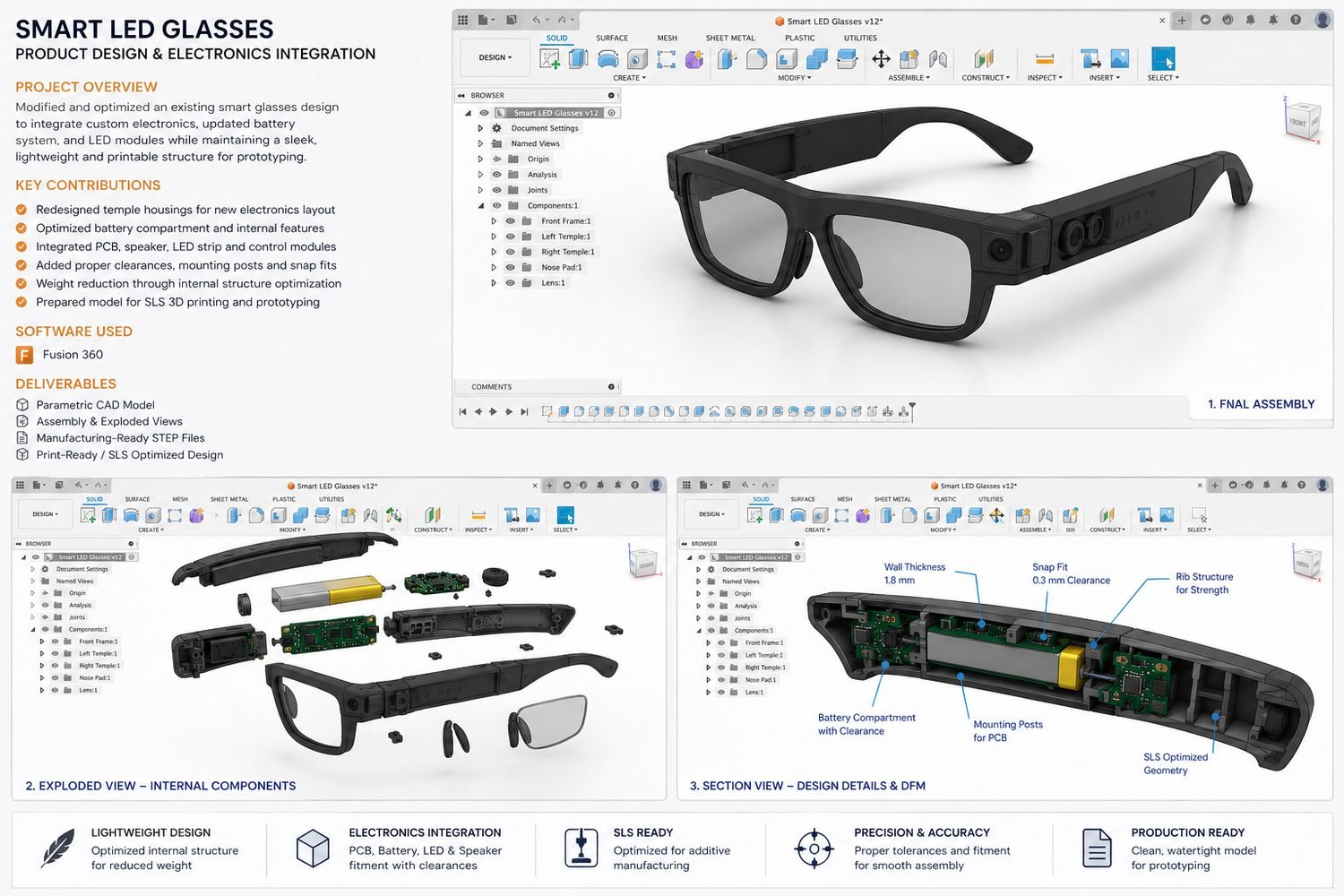
A smart glasses platform where the temple housings were reengineered with wall thickness, snap-fit clearance and rib structure tuned specifically for SLS 3D printing, so the frame stayed light and comfortable for all-day wear rather than just structurally sufficient.
View portfolioYes, reviewing an existing file that was not originally built with DFM in mind, and identifying what needs to change before it goes to a manufacturer, is a common starting point.
Injection molding, CNC machining, sheet metal fabrication and 3D printing (FDM and SLS) are the primary processes covered.
Both. A findings list on its own is not that useful without someone who can also implement the fix in the model.
As early as possible, ideally at the concept CAD stage rather than after detailed design is finished, since that is when changes are cheapest to make.
Yes, incorporating a manufacturer's own DFM feedback into a revised, quotable package is a normal part of this service.
Use these pages to compare scope and deliverables before combining services into one project.
I’ll review the available information and suggest a practical first milestone.